Aquamarine Meaning & Healing: The Art of Speaking Calmly with the World
There are crystals that whisper. Aquamarine is one of them.
Its power is not in brilliance, but in clarity. Not in intensity, but in honesty. It’s a stone for those who are learning, often painfully, that silence is not absence—but presence, refined.
When the Voice Shakes, but the Soul Knows
The first time I held Aquamarine, I wasn’t searching for calm. I was searching for a way to be heard—without shouting.
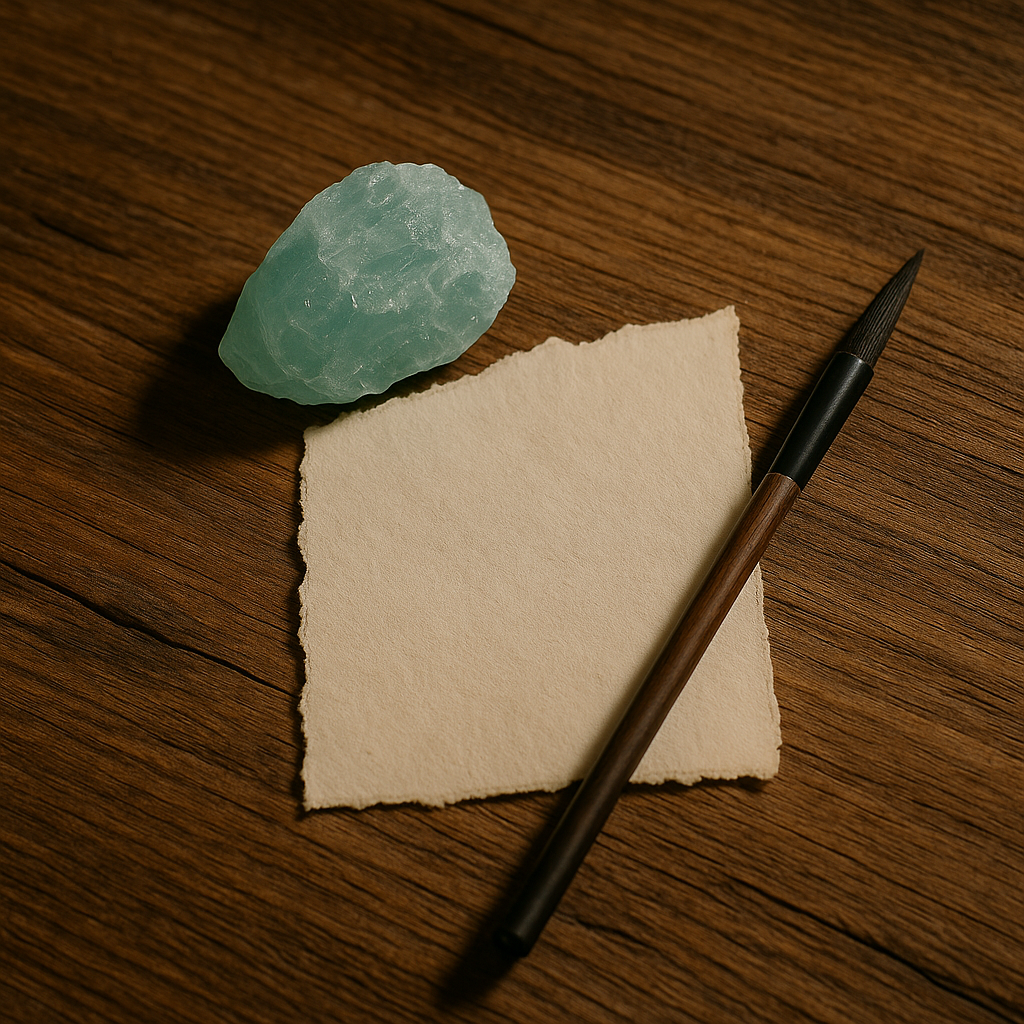
It was during a chapter of my life marked by friction: difficult conversations, impossible boundaries, and the constant pressure to be either agreeable or aggressive. I remember holding a pale, sea-colored stone between my fingers and feeling something both strange and familiar: my breath softened.
Not my thoughts. Not my heart. Just my breath.
And that was enough to begin.
Aquamarine and the Psychology of Expression
In psychological language, Aquamarine works along the throat chakra, but this is only the surface.
Its real effect lies in calming the limbic system—the emotional brain that floods us when we’re about to speak our truth. Aquamarine is not about sounding confident. It is about being coherent while afraid.
This stone supports what psychologists call regulated expression: the ability to speak while remaining in the body. It doesn’t silence the fear—it gives you a container for it. In trauma work, we often say, “Name it to tame it.” Aquamarine helps you name it, gently.
And this phrase is more than poetic. Neuroscience research—particularly studies on affect labeling—has shown that naming our emotions can reduce the activity of the amygdala and restore calm to our nervous system. If you’re curious about the science behind this, this article from Psychology Today explores how simple emotional labeling can help us reclaim clarity during difficult emotional moments.
It helps people who’ve been told that speaking up makes them unloveable. It helps those who’ve been punished for asking. It helps you stay kind, even when you must be firm.
Wind, Water, and Flow: The Feng Shui Placement of Aquamarine
In Feng Shui, water governs communication and flow. Aquamarine, as a crystal echo of the ocean, belongs to spaces that require peaceful dialogue.
Place it near your workspace when navigating stressful emails.
Keep it in your bedroom when relationships need repair.
Carry it on you before a vulnerable conversation.
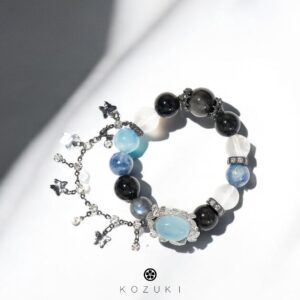
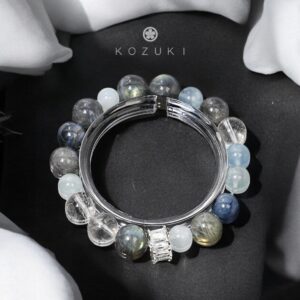
For those seeking to bring aquamarine’s soft clarity into their daily life, the Kozuki collection offers a few pieces where this energy takes form in gemstone.
Luna Papillon carries the elegance of wings in still air. Moonshadow no Umi reflects the ocean’s calm after storm. And Hananomori evokes the serenity of forest light filtered through morning mist.
Each bracelet is more than ornament—it’s a reminder that your voice can be both tender and true.
These are not rituals. They are invitations. Aquamarine does not force tranquility. It reminds you that you have permission to be soft—without becoming small.
Japanese philosophy calls this “Yūgen (幽玄)”—the subtle beauty of the unseen. Aquamarine lives in that space. It doesn’t sparkle loudly, but it resonates deeply.
Japanese philosophy calls this “Yūgen (幽玄)”—the subtle beauty of the unseen. Aquamarine lives in that space. It doesn’t sparkle loudly, but it resonates deeply.
The Illusion of Harshness: A Philosophical Inquiry
We live in a culture that equates assertiveness with volume, and clarity with dominance. But Aquamarine proposes a different model: that real strength is gentle, and that true conviction does not tremble under the pressure to dominate.
There is a Zen phrase I often return to:
“Do not speak unless you can improve upon the silence.”
Aquamarine doesn’t beg you to speak—it helps you know when your silence is sacred, and when your voice is medicine.
This is not about being passive. It’s about refined courage. Courage without war. Voice without violence.
The Ritual of Cleansing: For the Self, Not Just the Stone
Like all crystals, Aquamarine benefits from cleansing. But let us be honest—most of the time, the cleansing is not for the stone. It’s for us.
When I rinse mine under cold water or leave it by the moonlight, I’m not purifying it. I’m resetting my energetic field. I’m saying: Let me begin again, not with perfection—but with peace.
Aquamarine does not erase emotion. It refines it. It doesn’t block expression. It tempers it. In many ways, cleansing the stone becomes a metaphor for the gentle art of regulating ourselves.
Who Is Aquamarine Truly For?
This stone is for the soft-spoken warrior.
It is for the therapist, the poet, the shy child trying to answer a question in class. It is for the adult who still trembles before telling someone, “That hurt me.”
It is for the ones who have been gaslit so often they no longer trust the sound of their own voice.
Aquamarine teaches that the voice doesn’t have to be loud to be true. That whispering can be a form of resistance. That softness is not weakness—it’s wisdom in silk.
Final Thoughts: The Art of Speaking Calmly with the World
Aquamarine is not just a crystal. It is a philosophy.
A way of moving through the world with grace, of standing in your truth without turning it into a weapon.
We speak so much about empowerment today. Aquamarine reminds us that the most empowered voice is often the one that says just enough—and no more.
In a world that rewards shouting, this stone teaches the art of listening first, speaking second, and always breathing in between.